
Understanding Hip and Shoulder Bursitis
Pain around the hip or shoulder can make everyday activities surprisingly difficult. Walking, sleeping comfortably, reaching overhead, gardening, exercising, or even getting dressed can become frustrating when pain persists.
At Oak Tree Osteopathy in Canterbury, bursitis is one of the more common conditions we see in both active adults and older patients. The good news is that with the right management, most people can significantly improve their pain and return to the activities they enjoy.
What Is Bursitis?
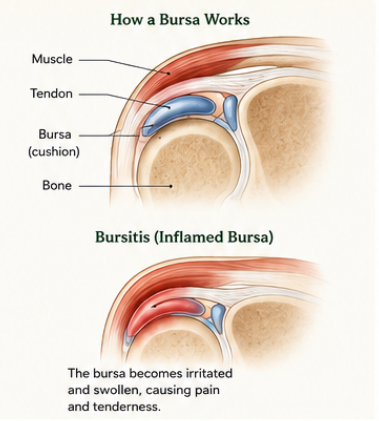
A bursa is a small fluid-filled sac that helps reduce friction between muscles, tendons, and bones. These structures act like cushions throughout the body, particularly around joints that move frequently.
Bursitis occurs when one of these bursae becomes irritated or inflamed. This irritation can develop gradually over time or sometimes occur after a sudden increase in activity, repetitive strain, or injury.
Importantly, bursitis is often not just an isolated “inflamed sac.” In many cases, there are also contributing issues involving muscle weakness, tendon overload, joint stiffness, posture, or movement patterns that place increased stress on the area.
The hip and shoulder are two of the most common locations for bursitis.
Hip Bursitis
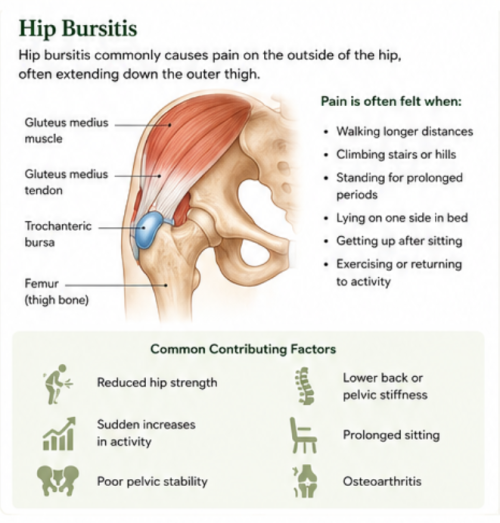
Hip bursitis commonly causes pain on the outside of the hip, often extending down the outer thigh. Many people notice discomfort when:
- Walking longer distances
- Climbing stairs or hills
- Standing for prolonged periods
- Lying on one side in bed
- Getting up after sitting
- Exercising or returning to activity
This condition is particularly common in middle-aged and older adults, although active younger people can also develop it.
In many cases, what people call “hip bursitis” also involves irritation of the gluteal tendons around the side of the hip. Weakness in the hip muscles can lead to increased compression and irritation around the bursa and tendons over time.
Why Does Hip Bursitis Develop?
Common contributing factors include:
- Reduced hip strength
- Sudden increases in walking or exercise
- Poor pelvic stability
- Lower back or pelvic stiffness
- Changes in activity levels
- Osteoarthritis
- Prolonged sitting
- Repetitive strain
Sometimes the pain can gradually build over months before becoming severe enough to interfere with sleep or daily activities.
Shoulder Bursitis
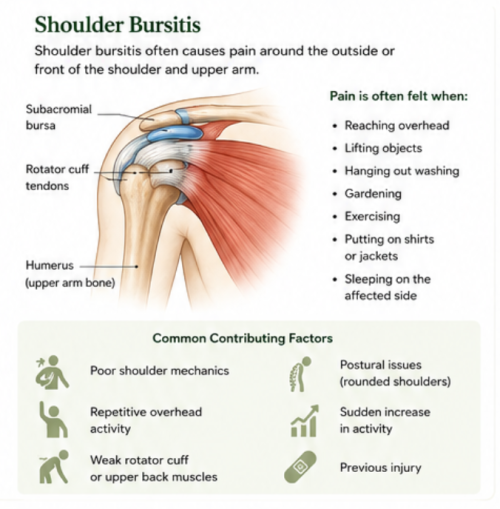
Shoulder bursitis often causes pain around the outside or front of the shoulder and upper arm. The pain is commonly aggravated by overhead movements and can make simple daily tasks difficult.
People often notice pain when:
- Reaching overhead
- Lifting objects
- Hanging out washing
- Gardening
- Exercising
- Putting on shirts or jackets
- Sleeping on the affected side
Shoulder bursitis frequently occurs alongside irritation of the rotator cuff tendons. Poor shoulder mechanics, posture, weakness, or repetitive overhead activity can all contribute to irritation around the joint.
If shoulder pain persists for too long, people may begin avoiding movement altogether, which can sometimes contribute to increasing stiffness and even frozen shoulder.
Is Rest the Answer?
One of the biggest misconceptions about bursitis is that complete rest is the best treatment.
While reducing aggravating activities temporarily can help calm symptoms, prolonged rest often leads to more weakness, stiffness, and reduced tolerance to movement.
In most cases, recovery involves finding the right balance between:
- Reducing excessive irritation
- Maintaining mobility
- Improving strength
- Gradually rebuilding activity tolerance
Appropriate movement is usually an important part of recovery.
How Osteopathy May Help
At Oak Tree Osteopathy, treatment for bursitis focuses not only on the painful area itself, but also on the surrounding muscles, joints, and movement patterns contributing to the problem.
Osteopathic management may include:
- Hands-on treatment to improve joint and muscle mobility
- Soft tissue techniques
- Stretching and mobility advice
- Strengthening exercises
- Postural guidance
- Load management advice
- Activity modification strategies
The goal is not simply short-term pain relief, but improving long-term function and helping patients return confidently to everyday activities.
The Importance of Strengthening
For both hip and shoulder bursitis, strengthening is often one of the most important components of long-term improvement.
For hip bursitis, strengthening commonly focuses on:
- Gluteal muscles
- Hip stabilisers
- Core control
- Pelvic stability
For shoulder bursitis, treatment may involve strengthening:
- Rotator cuff muscles
- Upper back muscles
- Shoulder blade stabilisers
- Postural support muscles
Gradual strengthening helps improve the body’s ability to tolerate movement and reduces ongoing overload on irritated tissues.
Staying Active Matters
Many patients worry that continuing activity will worsen the condition. While pushing through severe pain is rarely helpful, staying reasonably active is usually beneficial.
Maintaining movement helps:
- Prevent stiffness
- Maintain muscle strength
- Improve circulation
- Support joint health
- Improve overall fitness and wellbeing
The key is modifying activity appropriately rather than stopping completely.
When Should You Seek Help?
If pain is:
- Persisting for several weeks
- Affecting sleep
- Limiting walking or daily activities
- Causing weakness or reduced movement
- Preventing exercise or hobbies
…it is worth having the issue properly assessed.
Early management can often help prevent longer-term compensation patterns, worsening weakness, and ongoing irritation.
Managing Your Body for the Long Term
Conditions like hip and shoulder bursitis become more common as we age, but they do not have to stop you from living actively.
With the right combination of treatment, movement, strengthening, and activity management, most people can continue enjoying travel, exercise, gardening, walking, and time with family without persistent pain limiting their lifestyle.
At Oak Tree Osteopathy in Canterbury, we work with patients to help reduce pain, restore movement, and support long-term healthy activity so they can continue doing the things they enjoy most. Book online now if you are needing assessment and treatment for your bursitis.